180 Franklin St Framingham, MA
01702 United States
[email protected]
24/7 Support
+1 (617) 571-4368
24/7 Support

01702 United States
24/7 Support
24/7 Support
HERS Ratings | Massachusetts
At HERS Rating Specialist, we offer professional duct leakage testing services to assess the efficiency of your building’s HVAC system. Ductwork plays a critical role in maintaining a comfortable indoor environment, and sealing any leaks can significantly improve energy performance and reduce heating and cooling costs.
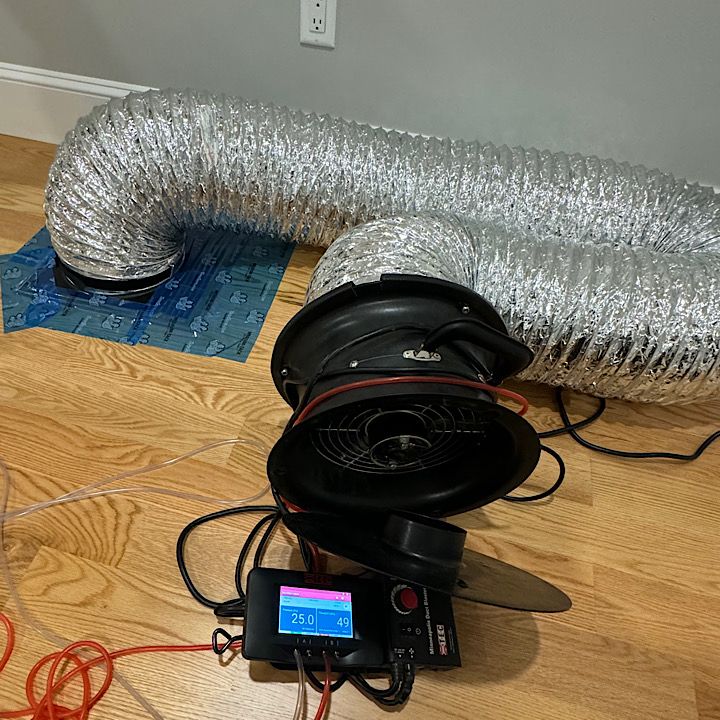
Duct leakage testing in Massachusetts helps determine how much air is escaping from a home’s HVAC duct system. Excess duct leakage can significantly reduce heating and cooling efficiency and can negatively impact a home’s HERS rating. By measuring both total duct leakage and duct leakage to outside conditioned space, builders and homeowners can understand how well their HVAC distribution system performs and where improvements can be made.
Duct leakage testing in Massachusetts is an important part of improving HVAC efficiency, reducing energy waste, and helping homes perform better in a HERS rating. If your duct system leaks, heated or cooled air can escape before it reaches the rooms it is meant to serve. That means your HVAC system works harder, comfort drops, energy bills rise, and the home becomes less efficient overall.
At HERS Rating Specialist, we provide duct leakage testing in Massachusetts to help builders, homeowners, and developers understand how well their duct systems are performing and how duct leakage can affect code compliance, system efficiency, and energy ratings.
Duct leakage testing measures how much air is escaping from a forced-air duct system. The test helps determine whether the ductwork is tight and efficient or whether air is leaking into attics, basements, crawlspaces, garages, wall cavities, or other spaces where it does not benefit the home.
This testing is commonly performed with a calibrated duct tester. Registers and grilles are temporarily sealed, the duct system is pressurized, and the airflow needed to maintain test pressure is measured. That result shows how much leakage exists in the duct system.
Leaky ductwork reduces HVAC performance because conditioned air is lost before it reaches the living space. In a supply system, air may leak out before it gets to bedrooms, living rooms, or finished areas. In a return system, leaks can pull unconditioned air from attics, basements, garages, or crawlspaces into the system. This can make the house less comfortable and force heating and cooling equipment to run longer than necessary.
In a typical home, duct leakage can waste a significant amount of energy. That is one reason duct sealing and duct leakage testing are so important in both new construction and existing homes. If you are already working on blower door testing in Massachusetts, duct performance should also be reviewed because both air leakage and duct leakage affect overall building efficiency.
Duct leakage plays a direct role in home energy performance and can affect a home’s HERS score. A HERS rating evaluates multiple parts of the home, including insulation, windows, HVAC systems, ventilation, and leakage. If the duct system is leaking, the home is less efficient, and that can make it harder to achieve a stronger HERS result.
For builders and homeowners in Massachusetts, this matters because duct leakage can impact compliance, projected efficiency, and the overall performance of the house. In many cases, tighter ducts support better HVAC delivery, better comfort, and stronger HERS outcomes.
One of the most important things to understand in duct testing is the difference between total duct leakage and duct leakage to outside. These are related, but they are not the same.
Total duct leakage measures all air escaping from the duct system, regardless of where it goes. If air leaks into a basement, attic, garage, wall cavity, or any other space, it counts toward the total leakage number.
In simple terms, total duct leakage tells you how tight the entire duct system is overall.
Leakage to outside measures only the air that escapes from the duct system to spaces that are outside the home’s conditioned space or pressure boundary. This is often the more serious energy loss because that air is no longer helping condition the living area.
In simple terms, leakage to outside tells you how much duct air is being lost to unconditioned areas.
If a duct system has 80 CFM total leakage but only 25 CFM leakage to outside, that means:
Both numbers matter, but leakage to outside is usually the more important number when evaluating real energy loss.
Conditioned space is the part of the home that is intentionally heated or cooled and lies inside the building’s thermal and pressure boundary. Unconditioned space includes areas such as vented attics, garages, many crawlspaces, and other areas outside the main living enclosure.
This distinction matters because a duct leak inside conditioned space is still not ideal, but it is usually less damaging than a leak into an attic or garage. When ducts run outside conditioned space, good sealing becomes even more important.
In Massachusetts, duct leakage testing can be especially important for new homes, additions, and high-performance projects where energy efficiency is a major goal. If a home is using a HERS-based compliance path or aiming for better overall performance, duct leakage can become a meaningful part of the final result.
Builders and homeowners also benefit because tight ducts can improve comfort, reduce wasted heating and cooling, and help HVAC systems operate more effectively. If you are already planning duct testing, it is often smart to review related services such as blower door testing and HERS ratings so the home is evaluated as a complete system.
Duct leakage testing is most valuable when looked at alongside other building performance testing. For example, a home may have good insulation but still perform poorly if the ducts leak badly. Likewise, a home may pass a blower door test but still lose efficiency through poorly sealed ductwork.
That is why many projects benefit from a full building performance approach that includes:
At HERS Rating Specialist, we help builders, contractors, developers, and homeowners understand how duct leakage affects home performance. We can explain whether the issue is total leakage, leakage to outside, or both, and how those results may affect efficiency and HERS ratings.
If you need duct leakage testing in Massachusetts, we can help you evaluate the system, understand the results, and identify the next steps to improve performance.
For more information about duct system efficiency, HERS ratings, and Massachusetts energy code topics, see:
HERS Rating Specialist, we are dedicated to providing top-tier energy consulting services to homebuilders, architects, developers, and contractors across Massachusetts.
© 2026, All Rights Reserved.