180 Franklin St Framingham, MA
01702 United States
[email protected]
24/7 Support
+1 (617) 571-4368
24/7 Support

01702 United States
24/7 Support
24/7 Support
HERS Rating Specialist helps builders, homeowners, architects, and developers comply with the 2021 IECC energy code, the 2024 Massachusetts Stretch Energy Code, and local performance-based energy requirements across Massachusetts. If you are building a new home, addition, gut renovation, or multifamily project, our team helps you understand the code, improve the design, achieve the required HERS score, and avoid expensive problems before final inspection.
We provide guidance for HERS ratings, blower door testing, duct leakage testing, ventilation requirements, heat pump compliance, insulation values, window performance, hot water equipment, and documentation needed to pass code and qualify for available incentives.
Need help with energy code compliance in Massachusetts?
Call 617-571-4368 or email [email protected] to get help with your project.
A HERS Rating stands for Home Energy Rating System. It is a standardized method used to measure the energy efficiency of a home. The lower the HERS score, the better the home performs. A home with a lower score typically has lower heating and cooling costs, better insulation, reduced air leakage, and more efficient equipment.
In Massachusetts, a HERS rating is often used as part of the compliance path for stretch code, new construction, and certain renovation or addition projects. A certified HERS rater models the home, reviews the plans, performs inspections, and completes testing such as blower door and duct leakage testing to confirm that the building meets the required performance target.
| HERS Score | What It Means |
|---|---|
| 100 | Roughly a standard reference home |
| 85 | More efficient than a basic code reference home |
| 70 | Substantially improved efficiency |
| 45 | Very high performance all-electric new construction target |
| 42 | Very aggressive performance target often used for new homes with gas |
| 0 | Net zero energy performance |
The HERS process starts with an energy model. We review the plans, wall assemblies, insulation levels, windows, air sealing details, HVAC equipment, ventilation strategy, hot water system, and other energy-related components. That information is entered into approved software to estimate the projected HERS score.
During construction, we verify that the project is being built as modeled. At the end of the job, we perform field testing to confirm the building actually meets the expected performance level. This usually includes:
Once all required information is verified, the final HERS score is issued. That score helps determine whether the project complies with the energy code pathway being used.
The target score depends on the project type and fuel type. Below is the chart you requested.
| Project Type | Target HERS Score |
|---|---|
| New Construction - All Electric | 45 |
| New Construction - Gas | 42 |
| Remodel - All Electric | 70 |
| Remodel - Gas | 65 |
Important: Reaching these targets is not just about one item. Passing a HERS rating usually depends on the full package working together, including insulation, windows, air sealing, HVAC design, ventilation, hot water equipment, and proper field testing.
At HERS Rating Specialist, our role is to help make the code understandable and achievable. We work with your team before products are ordered so that the project stays aligned with the energy model and code requirements. This can help avoid failed inspections, redesign costs, change orders, and missed rebate opportunities.
Our work commonly includes plan review, energy modeling, code consulting, HERS rating services, blower door testing, duct leakage testing, ventilation guidance, and help with equipment selections. We also explain how choices like window U-value, SHGC, ERV sizing, heat pump selection, and heat pump water heaters can affect compliance.
This is especially important in Massachusetts because many municipalities follow stricter energy performance standards, and all-electric homes are becoming more common as projects aim for stretch code compliance and better rebate opportunities.
The best way to comply is to address the energy code early. Waiting until construction is nearly done can make it much harder and more expensive to fix performance problems. Most successful projects focus on these key areas:
If your project is all electric, there may be more flexibility for incentives and long-term energy savings. If your project includes gas equipment, it is still critical to verify whether that path is allowed, practical, or likely to meet the target score based on the municipality and code pathway.
Many Massachusetts projects also want to qualify for Mass Save incentives. A strong HERS score, efficient equipment, and correct documentation can play a major role in rebate eligibility. Depending on the project type, all-electric design, heat pumps, heat pump water heaters, ventilation, and envelope improvements may support better incentive outcomes.
HERS Rating Specialist helps clients understand the relationship between energy code compliance and rebate opportunities so the project is set up correctly from the beginning.
Below are helpful code and program resources:
We help simplify one of the hardest parts of residential construction in Massachusetts. Whether you are building a custom home, a multifamily project, an addition, or a major remodel, we help you understand what the project needs to pass. Our goal is to make sure the design, equipment, ventilation, and testing all line up with the final compliance path.
By working with HERS Rating Specialist early, you can reduce surprises, improve the chance of hitting the target score, and keep the project moving toward final approval.
If you need help with 2021 IECC compliance, 2024 Massachusetts Stretch Code compliance, HERS ratings, blower door testing, or Mass Save rebate guidance, contact HERS Rating Specialist today.
Phone: 617-571-4368
Email: [email protected]
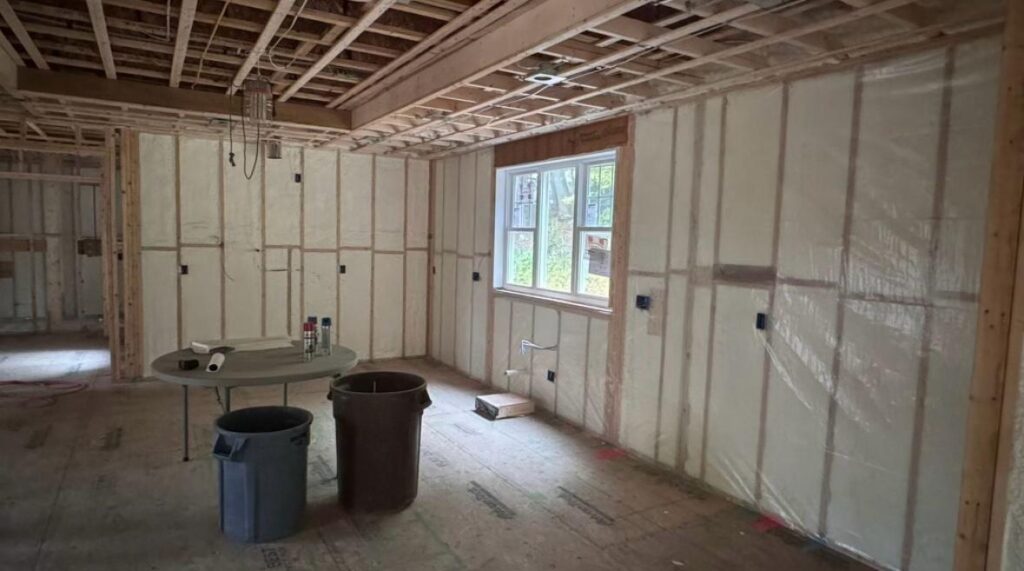
HERS Rating Specialist, we are dedicated to providing top-tier energy consulting services to homebuilders, architects, developers, and contractors across Massachusetts.
© 2026, All Rights Reserved.