01702 United States
24/7 Support
24/7 Support
At HERS Rating Specialist Massachusetts, we specialize in helping projects in Lexington meet the Stretch Energy Code requirements with ease. Our team includes RESNET-certified HERS Raters with:
We provide start-to-finish support that ensures your project meets or exceeds energy performance expectations, reduces your construction risks, and helps you take advantage of utility rebates and other financial incentives.
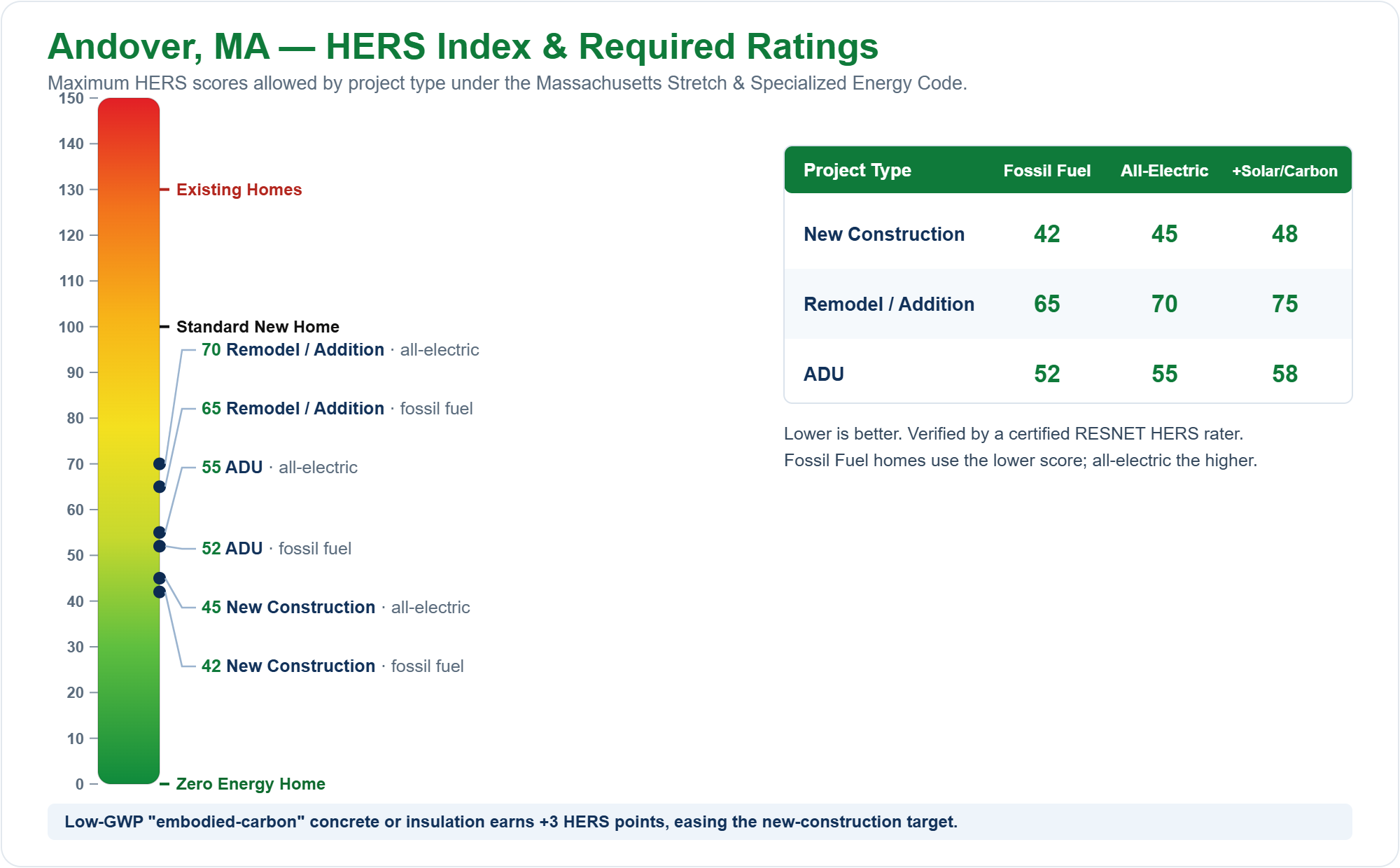
If you’re building or renovating in Andover, MA (or anywhere in the Merrimack Valley / North Shore), a HERS rating and performance testing may be required to meet the Massachusetts Stretch Energy Code or Specialized Opt-in Stretch Code—and it’s often the same documentation you need to keep your project moving through permit, inspections, and closeout.
HERS Rating Specialist provides:
HERS Ratings (RESNET)
Blower Door Testing (ACH50)
Duct Leakage Testing
Midpoint insulation / air sealing inspections
Stretch Code / Specialized Stretch Code consulting
Support with eligible Mass Save® programs and paperwork
Massachusetts has multiple energy code pathways (Base, Stretch, Specialized), published and maintained by the Massachusetts DOER.
We work throughout the region, including: North Andover, Lawrence, Methuen, Haverhill, Tewksbury, Wilmington, Reading, North Reading, Boxford, Middleton, Danvers, Salem, Lynnfield, Wakefield, Woburn, Burlington, Billerica, Chelmsford, Lowell, Dracut, and nearby communities.
HERS stands for Home Energy Rating System. It’s a nationally recognized system used to model and verify a home’s energy performance, producing a HERS Index score (lower is better). The HERS Index is maintained by RESNET, and certified HERS Raters perform inspections and diagnostic testing to verify inputs.
A HERS rating is commonly used for:
Massachusetts energy code compliance (Stretch / Specialized in many municipalities)
Quality control during construction (catch issues before drywall)
Incentive and program documentation (project-dependent)
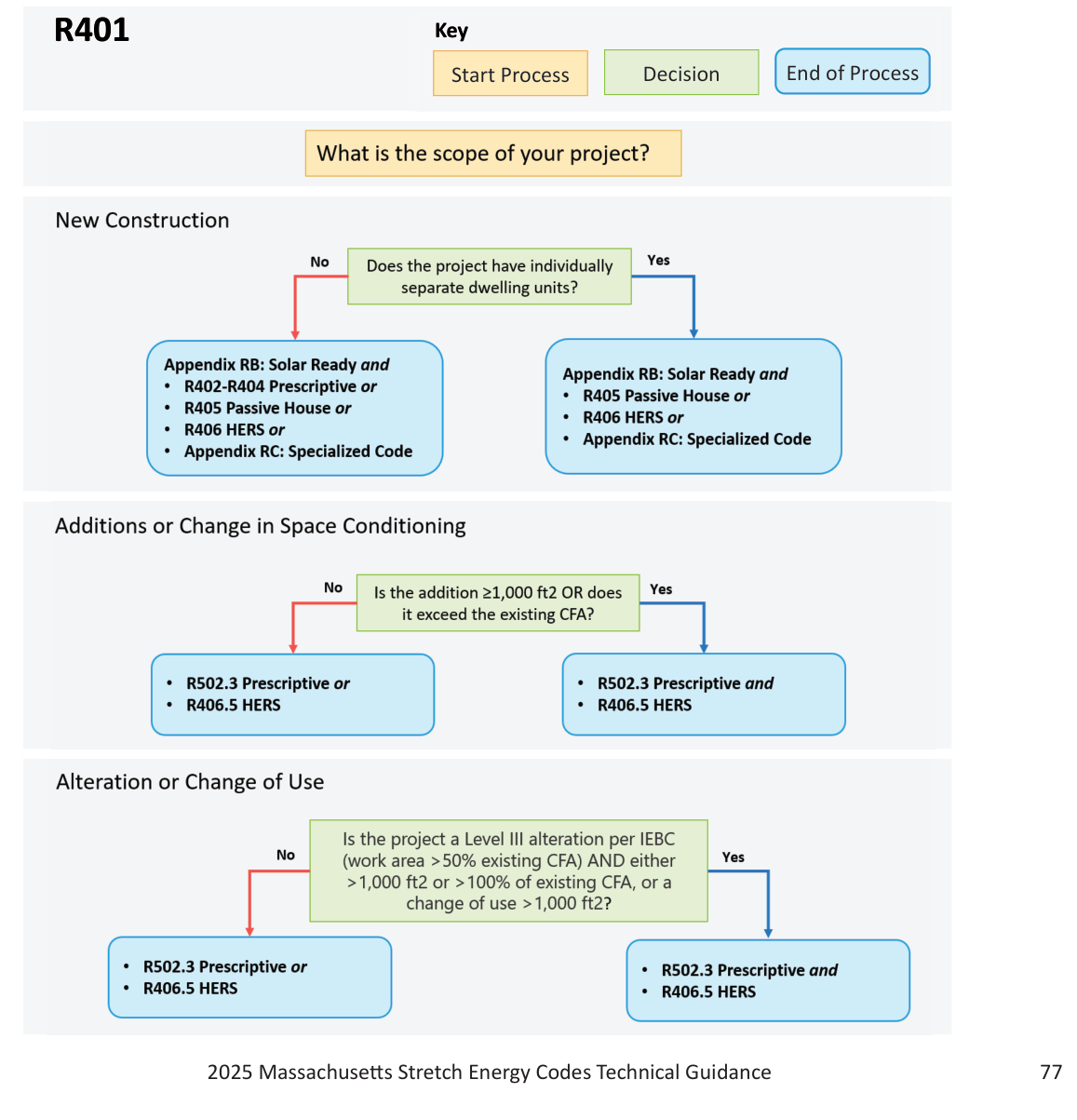
Many Massachusetts municipalities use the Stretch Energy Code (and some adopt the Specialized Opt-in Stretch Code). These code pathways are published by the Commonwealth and generally require stronger energy performance and verification than base code.
For many low-rise residential projects following the Stretch/Specialized path, compliance commonly involves:
A HERS/ERI performance target
Verified testing and inspections (not just “designed to”)
Documentation for building officials at permit and final
Massachusetts code documents also reference verification/testing by qualified professionals (including HERS Raters/Field Inspectors) for certain measures.
What we do: we coordinate with your architect/builder early, model the home, and then verify in the field—so you’re not guessing at the end.
We create an energy model based on your plans and specs (enclosure, windows, HVAC, DHW, ventilation, lighting, etc.). This helps you:
Understand what it will take to hit the required performance level
Avoid expensive last-minute changes
Set clear requirements for equipment, insulation, and air sealing
A blower door test depressurizes the home and measures how much air leaks through the building enclosure. Results are typically expressed as ACH50 (air changes per hour at 50 Pascals).
Why it matters: air leakage affects comfort, moisture control, indoor air quality, and whether you pass final testing.
If your project has ductwork (ducted heat pumps, central systems, etc.), duct leakage testing verifies that conditioned air is delivered efficiently—rather than leaking into attics, basements, or chases.
A midpoint visit (often after insulation and air sealing, before drywall) is where we find:
Missing or compressed insulation
Thermal bypasses
Air sealing gaps at rim joists, top plates, penetrations, chases, and transitions
Fixing issues here is dramatically cheaper than fixing them at final.
Mass Save offers pathways and support for certain project types (new construction, renovations/additions, and more). Mass Save also explicitly notes start-to-finish support from a certified HERS rater for renovations and additions.
What we do: we help you align the design + documentation + field verification so you don’t lose time (or incentives) due to missing specs, missing test results, or late changes.
Note: Incentives and eligibility vary by program, utility, building type, and year. We’ll help you confirm what applies to your exact project based on the current program requirements.
Some Massachusetts stakeholders and industry groups have proposed and supported embodied carbon credits/adjustments within residential compliance pathways—such as a 3-point credit/adder related to low-carbon concrete supported by EPD documentation.
Low-emission concrete usually involves mix design choices (cement reduction, SCMs like slag/fly ash where appropriate, optimized strength targets, regional supply, and verified Environmental Product Declarations—EPDs).
The “HERS points” concept is tied to specific compliance pathways/rules and may be applicable only when your jurisdiction and project are using an embodied-carbon credit approach.
What we do: we help you document the strategy (EPDs/mix documentation, project specs, and how it interacts with your compliance path) so it’s usable for code submittals when applicable.
Building an ADU in Andover or nearby towns? ADUs are typically treated as residential low-rise construction, so energy code performance and verification can still apply—especially in Stretch/Specialized municipalities.
We support ADUs with:
Right-sized modeling for smaller footprints
All-electric heat pump options (common for ADUs)
Ventilation verification and air sealing strategy
Blower door testing + documentation for closeout
Local, code-focused guidance for Andover and surrounding towns
Fewer surprises at final (we aim to catch issues at midpoint)
Clear spec coordination with your architect/GC (windows, HVAC, ventilation, insulation, air sealing)
Clean reporting you can submit to building departments and keep in project records
A HERS rating is a RESNET-based energy performance evaluation that produces a HERS Index score and uses inspections/testing to verify key features. Many Massachusetts municipalities use Stretch or Specialized energy codes that rely on performance verification, and HERS ratings are commonly used to document compliance.
A blower door test measures air leakage by depressurizing the home and quantifying how quickly air enters through leaks. Results are typically reported as ACH50 (air changes per hour at 50 Pascals).
If your home has ductwork, duct leakage testing may be required by code or programs, and it’s also a best-practice quality check to ensure efficiency and comfort.
As early as possible—ideally during design/plans review. Early modeling helps avoid expensive changes late in construction and keeps your project aligned with Stretch/Specialized requirements.
Mass Save notes start-to-finish support from a certified HERS rater for renovations and additions, and HERS documentation is often part of program workflows depending on the project type.
Some compliance approaches and industry proposals include embodied carbon credits/adjustments—such as a 3-point credit/adder tied to low-carbon concrete supported by EPD documentation—depending on the pathway and jurisdiction.
In many cases, ADUs follow residential low-rise energy code requirements, and in Stretch/Specialized municipalities a HERS-based approach is commonly used for compliance and documentation.
Ready to schedule a plan review, blower door test, duct test, or full HERS rating package?
Add your preferred contact form / phone / email here, plus a short intake form (project address, unit count, building type, fuels, target permit date, plan set upload).