
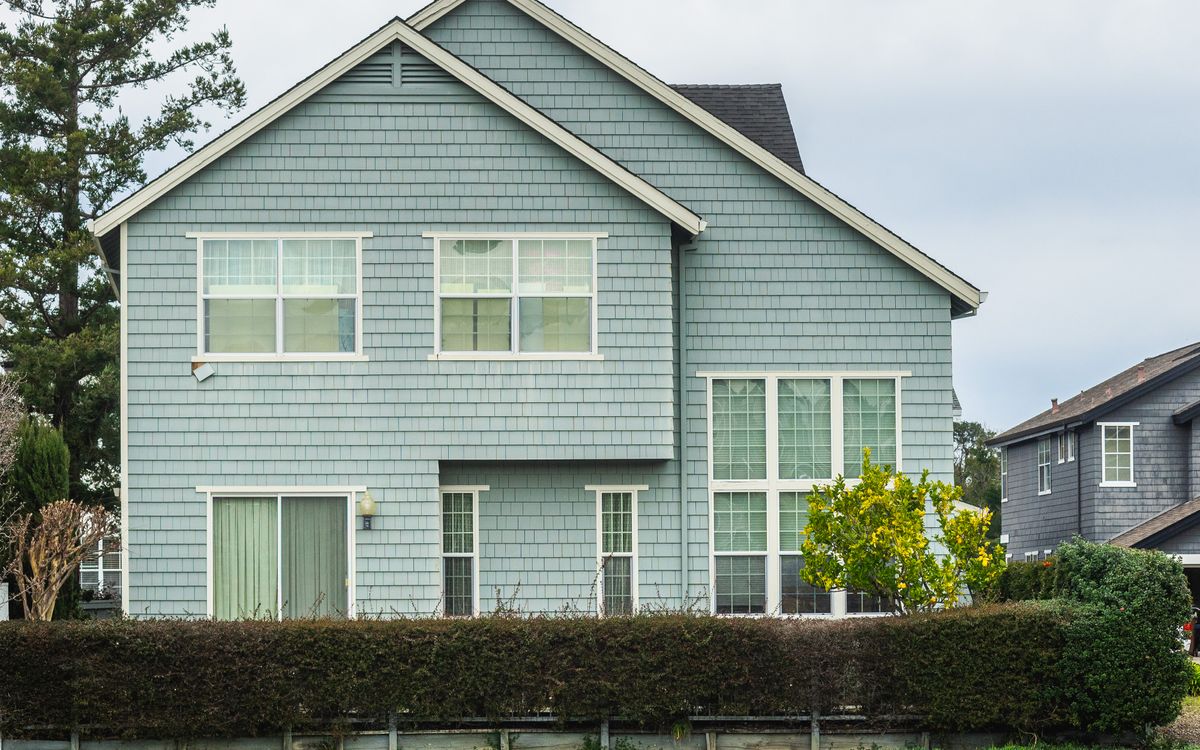
Accessory Dwelling Units (ADUs) are one of the fastest ways to add housing in Massachusetts — and they come with financial incentives and their own energy-code rules. Here’s what you need to know, straight from the 2025 Massachusetts Stretch Energy Codes Technical Guidance.
ADU Rebates & Incentives
Qualifying accessory dwelling units in Massachusetts can receive incentives to help offset the cost of building energy-efficient, all-electric units:
What Is an ADU?
An Accessory Dwelling Unit is a smaller, independent living space on the same lot as a single-family home — with its own kitchen, bathroom, and entrance. Massachusetts is actively encouraging ADUs to expand housing supply, and the energy code reflects that: ADUs are always rated as a separate dwelling unit from the main house, and they get their own, more achievable energy targets.
The Four Types of ADUs
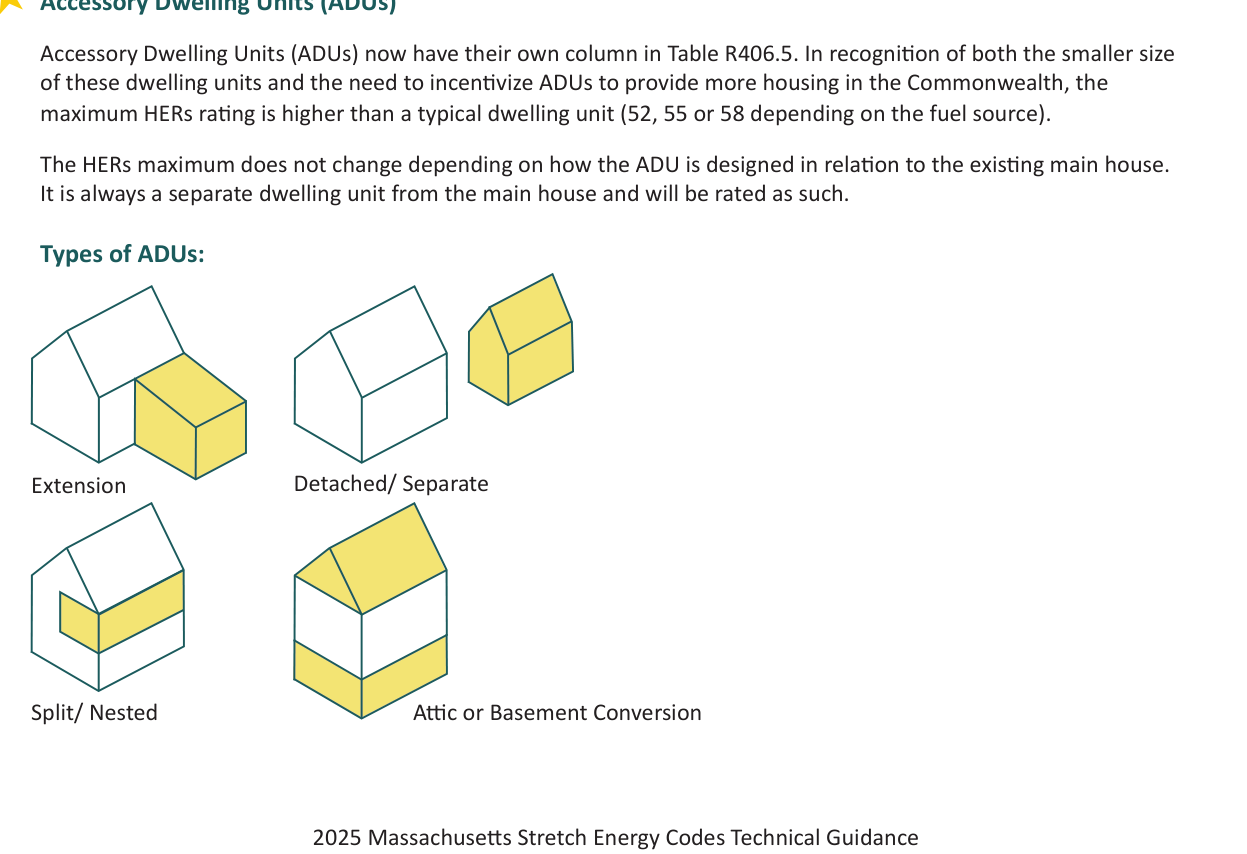
Under the 2025 Technical Guidance, ADUs fall into these types — and importantly, the HERS maximum is the same no matter which type you build, because the unit is always rated on its own:
- Detached / Separate — a standalone structure on the property.
- Attached — Split / Nested — carved out of, or built onto, the existing home.
- Attic or Basement Conversion — created within existing space.
- Extension — an addition built specifically as an independent unit.
ADU HERS Index Requirements (Table R406.5)
ADUs now have their own column in Table R406.5 of the Stretch Code. In recognition of their smaller size and to incentivize more housing, ADUs are allowed a higher (more achievable) maximum HERS Index than a typical new home. The exact ceiling depends on the energy source:
| ADU energy type | Maximum HERS Index |
|---|---|
| Mixed-fuel ADU | 52 |
| All-electric ADU | 55 |
| All-electric + on-site solar ADU | 58 |
The lower the HERS Index, the more efficient the home (HERS 0 = net-zero). Because ADUs get a higher ceiling, they’re often easier to bring into compliance than a full-size new home.
For Context: New-Home HERS Targets (Table R406.5)
Here’s how ADU targets compare with the maximums for standard new construction and for additions/alterations. Note the project HERS score used for compliance must be measured before any on-site solar generation:
| Clean Energy Application | New Construction (after 7/1/24) | Additions / Alterations / Change of Use |
|---|---|---|
| Mixed-Fuel Building | 42 | 52 |
| All-Electric Building | 45 | 55 |
| All-Electric + Solar Electric | 45 | 58 |
New homes with embodied-carbon credits can reach a HERS of up to 48. ADUs, by comparison, top out at 52–58 — a meaningfully easier target.
What Else Your ADU Needs to Pass
Beyond the HERS score, a new ADU following the HERS compliance path must also meet:
- Blower door test — verifying air-tightness (≤ 3.0 ACH50).
- Duct leakage test — if ducts run outside conditioned space (≤ 4 CFM25 per 100 sq ft).
- Mechanical ventilation — balanced ERV/HRV system per R403.6.
- EV-Ready parking where off-street parking is provided (pre-wiring, connection point, panel capacity).
- Solar-Ready or installed solar per the applicable appendix.
A certified HERS rater models the unit, inspects during construction, and performs the final diagnostic testing — then registers the rating for your building department.
Thinking About an ADU?
We’re a certified Massachusetts HERS rating company and we handle ADU energy-code compliance start to finish — HERS rating, blower door, and duct testing. We’ll also help you confirm which rebates your project qualifies for.
Get your ADU energy-code plan & a free quote
Talk to a certified HERS rater about your Massachusetts ADU.